
Fleet Maintenance Oil
How to Reduce Downtime Without Adding More to Your Plate
Let’s start with a situation that probably feels a little too familiar.
It’s mid-season. You’ve got jobs stacked up, crews scheduled tight, and one of your machines is down. Not catastrophic — nothing dramatic. Just enough to throw everything off. Now you’re reshuffling equipment, burning time, and hoping it doesn’t turn into something bigger.
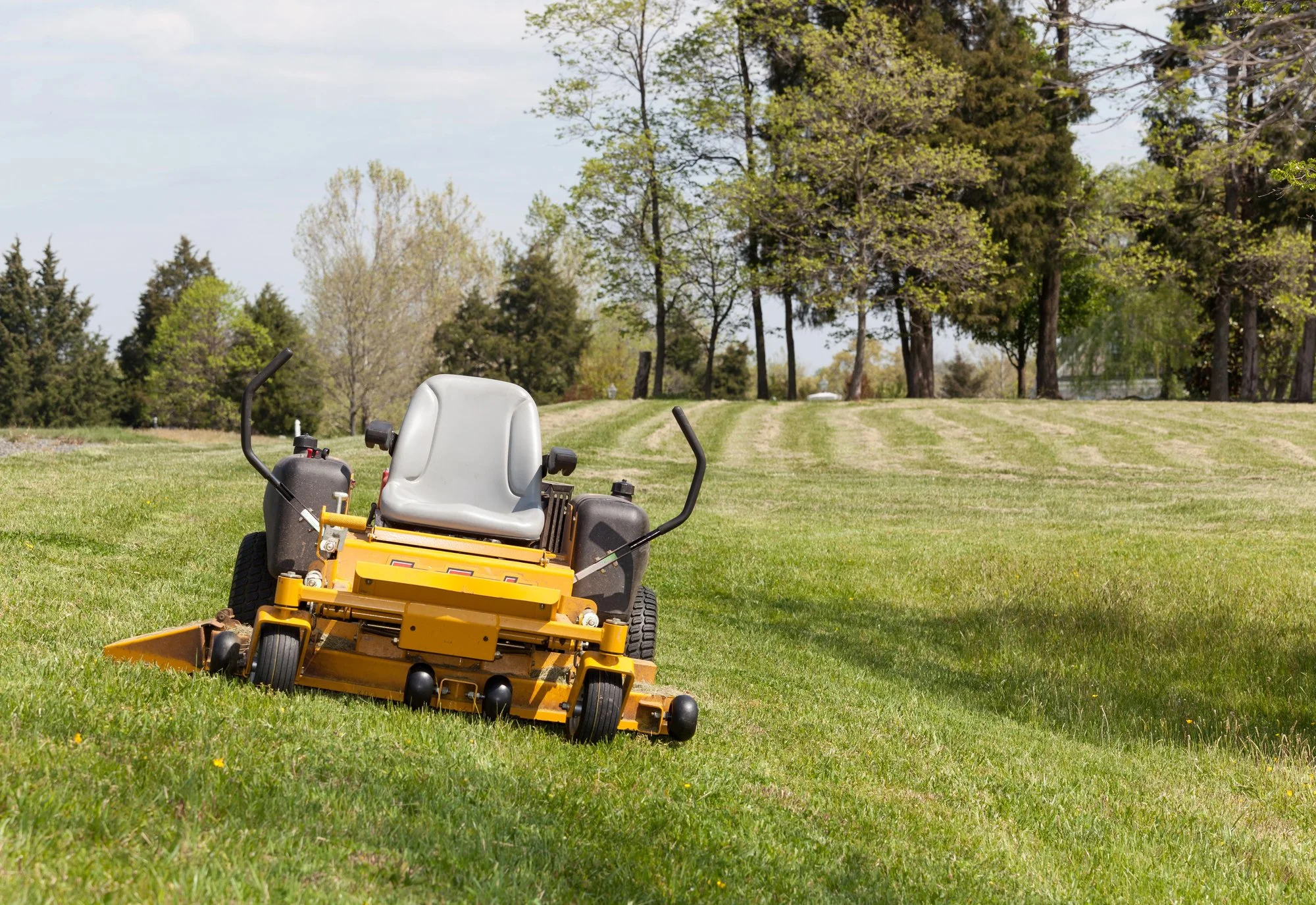
That’s the kind of downtime that quietly eats into your margins.
It’s often not the big, obvious failures, but the small interruptions that throw a wrench in the works. The extra oil changes. The machine that’s “fine” but not quite running right. The maintenance schedule that looks good on paper, but doesn’t hold up in real working conditions.
That’s where your fleet maintenance oil strategy actually matters.
I work with commercial operators every day — landscaping crews, construction teams, ag operations — and most of them aren’t losing money because they don’t maintain their equipment. They’re losing money because their maintenance plan isn’t built for how their equipment is actually used.
Let’s talk about how to fix that.
The Real Problem With Most Fleet Maintenance Plans
Most maintenance schedules are built around manufacturer recommendations. That’s not a bad starting point, but those intervals are based on average conditions.
And if you’re running a commercial fleet, especially here in the hot Georgia summer, there’s nothing average about your conditions.
We’re talking about:
Long run times under sustained load
High ambient temperatures
Stop-and-go cycles that stress engines and hydraulics
Dust, debris, and job site contamination
Equipment that doesn’t get a break during peak season
All of that changes the equation. Oil breaks down faster. Viscosity shifts. Heat accelerates oxidation. And suddenly that “every 100–200 hours” oil change interval isn’t protecting your equipment the way you think it is.
So what do most operators do? They compensate by changing oil more often. Which sounds responsible. But it creates a different problem entirely.
More Oil Changes ≠ Better Fleet Maintenance
On paper, frequent oil changes look like good maintenance. In reality, they come with costs most operators don’t fully account for.
Every oil change means:
Equipment is out of service
Someone is tied up doing the work
You’re buying oil and filters again
There’s always a chance that something goes wrong during service
Now multiply that across your entire fleet — five mowers, a couple of skid steers, maybe a compact tractor or two. You’re managing a constant cycle of maintenance interruptions, and here’s the part that usually gets missed: you’re increasing the number of times your equipment is unavailable even when everything is working perfectly.
That’s not efficient. That’s just busy.
I see this pattern all the time. A fleet operator who’s genuinely diligent about maintenance, doing everything “right”, and still spending more time pulling machines out of rotation than they should. The problem isn’t effort. It’s the underlying strategy.
What Actually Reduces Downtime in a Fleet
If the goal is less downtime, the strategy isn’t “do maintenance more often.” It’s to make each service interval work harder for you.
That’s where fleet maintenance oil selection starts to matter in a real, measurable way. When you switch from conventional oil to a premium synthetic like AMSOIL®, a few things change:
Oil Holds Up Longer Under Load
Premium Synthetic oil is engineered to handle sustained heat and stress without breaking down as quickly. That means more stable viscosity, better resistance to oxidation, and consistent protection across longer operating hours. Instead of your oil degrading halfway through a service interval, it stays in grade and keeps doing its job.
That last point matters more than most people realize. The equipment in your fleet isn’t running like a commuter car — an hour here, a cool-down, a restart. It’s running hard for hours at a stretch, in summer heat, under load. Conventional oil simply wasn’t designed for that duty cycle.
Extended Drain Intervals — When Done Right
This is where most of the ROI shows up. AMSOIL synthetic lubricants are designed for extended drain intervals in many commercial applications — often two to three times longer than conventional oil, depending on the equipment and conditions. (Oil analysis is the right tool to confirm what’s safe for your specific fleet, but the interval extension is real, and it’s documented.)
Fewer oil changes mean less scheduled downtime, less labor tied up in maintenance, and fewer opportunities for service-related issues. All of that means more time back in your day.
Better Protection When the Stakes Are Highest
Here’s the one that matters most. Your equipment doesn’t fail in the off-season. It fails in July, when you absolutely cannot afford it. High heat, long hours, heavy loads — that’s exactly when conventional oil is most likely to thin out or break down.
AMSOIL® is formulated to stay stable under those conditions, which means your engines and hydraulic systems are better protected when you need them most.
A Real-World Look at the Numbers
I worked with a landscaper in the Atlanta metro last summer with seven machines, solid maintenance habits, and nothing obviously wrong. When we mapped out what he was actually spending in time and service interruptions over the course of a season, the number surprised him.
Here’s what the comparison looked like for his fleet:
Running conventional oil:
Oil changes every 50 — 100 hours
~6 – 10 changes per machine per season
~42 – 70 total service events across the fleet
~63 – 105 hours of fleet downtime per season for oil changes alone
After switching to AMSOIL® synthetic:
Oil changes every 200 (potentially higher with oil analysis) hours (application dependent)
~2 – 3 changes per machine per season
~14 – 21 total service events across the fleet
~21 – 32 hours of fleet downtime per season
That's 52–105 hours of recovered fleet availability every season — same machines, same crews, same workload. For a landscape crew billing $1,200/day with a typical 8-hour day, 52 - 105 hours of recovered capacity is worth somewhere in the range of $7,800–$15,000 in potential billable time, just from oil changes, before you even get into failure prevention.
He also started using oil analysis to track what was happening inside his engines over time, where the second layer of value emerged.
Oil Analysis: The Tool Most Fleets Aren’t Using (But Should Be)
If you’ve already looked at the true cost of oil for a single machine, this is what that math looks like when you apply it across an entire fleet.
If you’re managing a serious equipment investment, guessing on oil intervals doesn’t make sense. Oil analysis gives you real data:
Is the oil still protecting, or is it breaking down?
Is there early wear showing up in the metal particulate count?
Are contaminants getting in, like water, fuel, dirt?
Can you safely extend the interval further, or should you change now?
It’s one of the simplest ways to turn maintenance from a fixed schedule into a smart system. And it’s a lot cheaper than replacing an engine.
For most commercial operators I work with, adding oil analysis to their program is what finally makes extended drain intervals feel confident rather than risky. You’re not guessing — you’re reading the data.
Not All Synthetic Oil Programs Are Equal
Switching to synthetic lubricants is a step in the right direction, but it’s not the whole picture. What actually moves the needle is having the right oil in the right application.
Your fleet likely includes:
Gas and diesel engines
Hydraulic systems
Gearboxes and differentials
2-stroke handheld equipment
Each one has different lubrication requirements. AMSOIL® offers application-specific formulations across all of these, and that’s where I spend a lot of time with new customers. Using the wrong oil (even a quality synthetic) can still leave performance on the table. Getting the right product into the right machine is the whole job.
“Will This Affect My Equipment Warranty?”
Short answer: no — not if you’re using a product that meets the required specifications. This comes up a lot, so here’s the straight answer.
The Magnuson-Moss Warranty Act protects your right to use third-party products like AMSOIL®. A manufacturer can’t void your warranty just because you didn’t use their branded oil. The burden is on the manufacturer to demonstrate the product caused the issue — and AMSOIL® is specifically designed to make that a non-issue from the start.
AMSOIL® products are Warranty Secure™, meaning they’re formulated to meet or exceed OEM requirements. If you’ve ever been told otherwise, it’s worth a second look at that claim.
AMSOIL® addresses this directly on their blog – these warranty myths are worth reading if you’ve ever been given the runaround on this.
This Isn’t About Oil. This Is About How Your Fleet Runs.
What we’re really trying to do is keep your equipment running when you need it, reduce interruptions during peak season, give you back time you’re currently spending on maintenance, and protect the investment you’ve already made in your fleet.
That looks different for every operation. Some fleets benefit most from extended drain intervals. Others need better protection under load. Some just need a clearer, simpler maintenance system that their crews can actually follow.
That’s the part you don’t get from a product page.
When I work with a commercial customer, we don’t start with products. We start with your operation.
What equipment are you running, and how hard is it being used?
Where is downtime currently happening in your fleet?
What does your maintenance schedule actually look like today — not on paper, in reality?
From there, we build a program: the right AMSOIL® products for each application, realistic service intervals based on your actual usage, and a clear picture of where you can safely extend intervals and where you want oil analysis to confirm it.
No guesswork. No overcomplicating it. Just a maintenance plan that actually matches how your fleet operates.
Ready to Reduce Downtime in Your Fleet?
If your current maintenance plan feels like it’s creating as many problems as it solves, it’s probably time to take a closer look.
If you’re running more than two or three pieces of equipment, a 20-minute conversation could save you real money — and real headaches during your busiest season. Tell me what you’re running, and I’ll tell you exactly where a synthetic program makes sense for your operation.
Schedule a consultation | Don Archer | 770-655-5329
FAQ: Fleet Maintenance Oil
-
It depends on your equipment and operating conditions, but premium synthetic oils like AMSOIL® are engineered to handle the heat, load, and extended run times common in commercial fleets. The key is matching the product to the application — which is exactly the kind of thing I work through with customers.
-
Yes — primarily through extended oil change intervals and improved protection under heavy use. Fewer service events and fewer wear-related failures both contribute to less downtime. The math gets compelling pretty quickly when you run it across a full fleet.
-
It varies by equipment, but many commercial operators using AMSOIL® safely extend intervals two to three times beyond conventional oil schedules. Oil analysis is the best way to confirm what’s right for your specific fleet rather than relying on a generic number.
-
In most cases, yes. Even for smaller fleets, catching early wear or confirming safe interval extension can save significantly more than the cost of the test. It’s a cheap way to get real confidence in your maintenance program.
-
Generally, yes. Most equipment transitions without issue as long as the correct specifications are followed. If you’re unsure about anything in your fleet, I can help you map it out before making the switch.