
Most maintenance decisions are based on a calendar or a number on a sticker. You hit a certain number of hours or months, and you change the oil — whether it needs it or not, whether it's still protecting well or not. That's not a system. That's a guess dressed up as a schedule.
Oil analysis is what turns guesswork into data.
I recommend it to every commercial customer I work with, and I use it with my own equipment. It's one of the most practical tools available for anyone running serious equipment — commercial fleet or personal vehicles — and it's far simpler to use than most people expect.
This post covers what oil analysis actually is, what it tells you, and how to do it yourself. I'll also give you my honest take on when it's worth the investment and when it isn't.
What Oil Analysis Actually Tells You
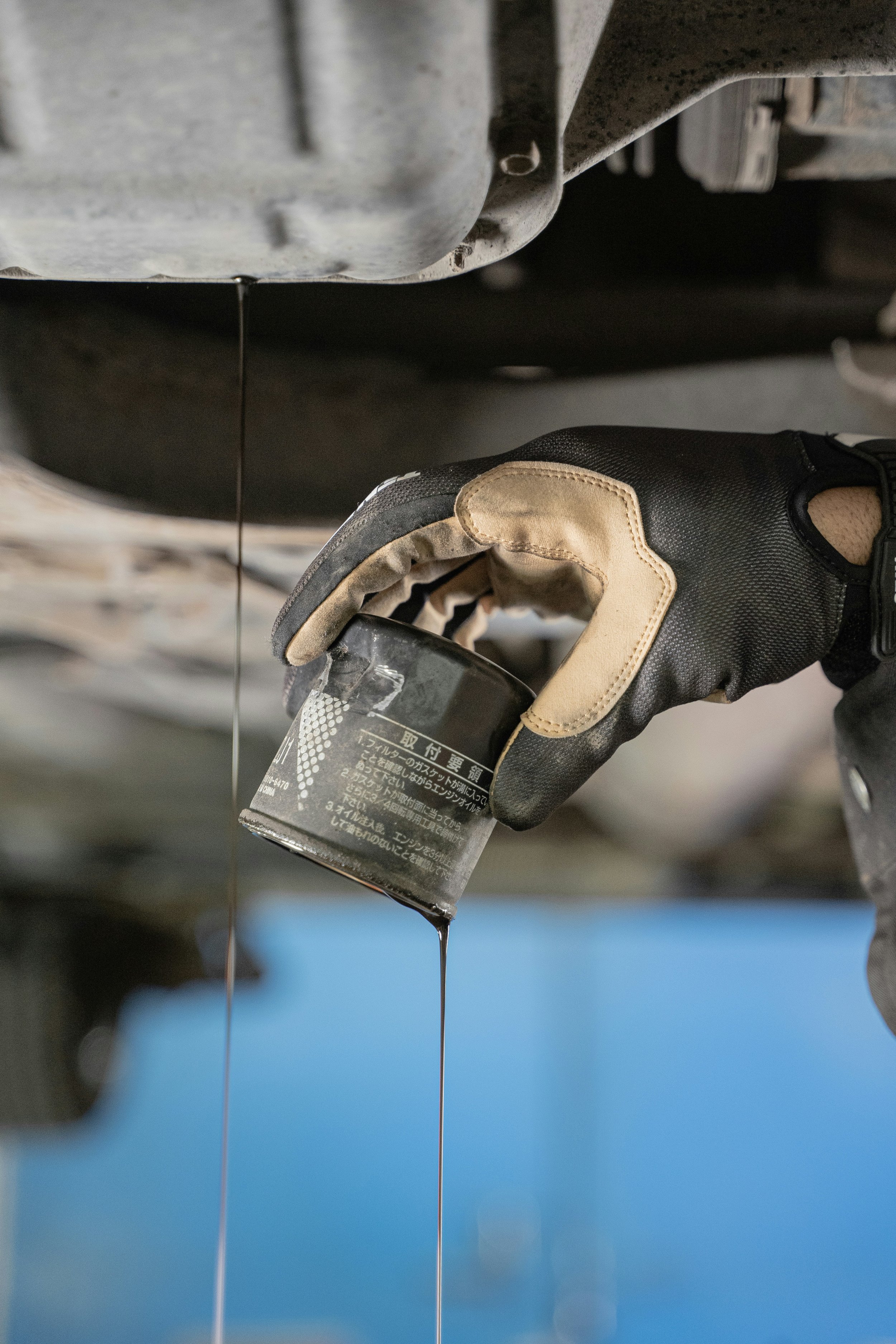
When oil circulates through an engine, it picks up information. Microscopic metal particles from wear surfaces. Combustion byproducts. Contaminants that have found their way in like water, fuel, and coolant. It also captures the chemical byproducts that form as the oil ages and oxidizes.
A used oil sample — typically just a few ounces drawn from the engine — captures all of that. A lab runs it through a battery of tests and produces a report that shows you:
Wear metals — elevated levels of iron, copper, aluminum, or chromium indicate wear happening in specific engine components. A pattern of wear metals over multiple samples tells you whether it's normal and gradual or accelerating toward a problem.
Contamination — water in the oil can signal a leaking head gasket or a cooling system issue. Fuel dilution means fuel is getting past the rings into the crankcase. Coolant contamination is a serious flag. All of these can be invisible with a dipstick check.
Oil condition — viscosity, oxidation levels, and total base number (TBN) tell you whether the oil is still doing its job. TBN is particularly useful because it measures the oil's remaining alkaline reserve, which neutralizes the acid byproducts of combustion. When TBN drops low, the oil is running out of capacity to protect.
Additive depletion — the chemistry that makes a good synthetic oil work degrades over time. An analysis can tell you whether your oil's additive package is still intact or whether you're running on base oil.
Put together, an oil analysis report is a health snapshot of your engine. Test your oil a few times over a season, and you start to see trends — and trends are where the real value is.
The Two Things Oil Analysis Is Actually For
If you're running high-hour equipment, this is where oil analysis starts paying for itself. You can order a kit here or reach out if you want help choosing the right one.
Oil analysis does two things well, and everything else is secondary.
1. It catches problems before they become failures
Elevated wear metals or contamination in an oil sample means something is changing inside your engine. In most cases, you're catching it weeks or months before it shows up as a symptom — rough running, oil consumption, low compression. That gap is valuable.
For commercial equipment, a catastrophic engine failure during peak season isn't just an expensive repair; it's a major disruption. It's missed jobs, rescheduled crews, and a customer who's wondering whether you can be counted on. Catching a developing head gasket leak in March, before the season starts, is a very different situation than catching it in August when you're slammed.
2. It gives you confidence to extend oil drain intervals
Extended drain intervals are where the real ROI shows up.
On paper, the math makes sense — fewer oil changes, less downtime, lower cost. But “makes sense on paper” isn’t the same as trusting it in your own equipment.
That’s where oil analysis comes in.
Instead of relying on a product claim, you’re looking at your own oil, in your own machine, under your actual operating conditions. The report tells you one of two things: the oil is still protecting, or it’s time to change it.
Either way, you’re not guessing — you’re making a data-driven call.
For high-hour equipment — 400+ hours a season — that kind of confidence isn’t just helpful. It’s what makes extended intervals practical. I cover the ROI in detail in our fleet maintenance oil strategy post.
Who Should Be Using Oil Analysis
Quite frankly, anyone running equipment where a failure is expensive or disruptive.
Commercial Fleet Operators
Commercial fleet operators are the most obvious candidates. If you're running landscaping crews, a construction operation, or an ag fleet, you have machines that are both expensive to replace and critical to keep running. The cost of an OAI Commercial Kit — which we'll cover in a moment — is trivial relative to even a minor engine repair, let alone a full replacement. Running analysis on your highest-hour machines every season is basic risk management.
Automotive Enthusiasts and High-Performance Builders
Automotive enthusiasts and high-performance builds are the other group where it makes a lot of sense. If you've built an engine, you want to know what's happening inside it. Oil analysis lets you monitor wear metals from a fresh build, confirm a new camshaft is breaking in properly, or verify that an extended interval is safe on your specific combination of parts and oil.
For anyone who's invested serious money in an engine, it's cheap insurance and useful data.
Those Looking to Extend Drain Intervals
Anyone thinking about extending drain intervals should run at least one analysis cycle before doing it. It tells you whether the oil in that specific application is a candidate for extension — and gives you a baseline to compare against on future samples.
Where it's less necessary:
Low-hour recreational equipment.
Standard vehicles on normal oil change schedules.
Situations where the cost of the test is disproportionate to the value of the equipment.
Oil Analysis Testing Kits: What You're Actually Ordering
AMSOIL® works with Oil Analyzers Inc. (OAI) for oil analysis, and the kits are available directly through AMSOIL's oil analysis page. There are a few different kit types depending on what you're trying to accomplish. The key difference between them isn’t just what they test — it’s how many samples you get, and when you use them.
These samples aren’t meant to be used all at once. They’re spaced out over time or equipment use. That spacing is what turns a single snapshot into a trend. The trend is what tells you whether things are improving, stable, or getting worse.
Failure Analysis Program Kit: AMSOIL Oil Analysis Failure Analysis Kit
Designed to diagnose a problem before you start replacing parts. Includes three samples, typically taken across a short window — when the issue appears, after additional run time, and after a change or repair. That sequence helps confirm whether the problem is consistent, getting worse, or resolved.Our comprehensive testing includes wear metals, fuel dilution, water, viscosity, and combustion byproducts.
Maintenance Improvement Program Kit: AMSOIL Maintenance Improvement Oil Analysis Kit
Built to establish a baseline and monitor equipment over time using the same comprehensive test panel as the Failure Analysis Program Kit. The maintenance kit includes four samples spaced across normal use, giving you enough data to define what “normal” looks like for your machines — and catch changes early. It’s a good starting point for a commercial fleet that hasn't done oil analysis before.
Drain Interval Improvement Program Kit : AMSOIL Drain Interval Oil Analysis Kit
Designed to answer one question: Can I safely run this oil longer? Includes four samples taken across your oil interval — early, mid, and late. That spacing shows how the oil holds up over time, so you can confirm, instead of guessing, whether your current interval is conservative, appropriate, or overextended.
Individual OAI Kits — AMSOIL Oil Analysis Single Test Kit
Used once you’ve established a baseline. At that point, you’re not building a trend — you’re checking that everything is still on track. Most customers use these for routine annual or seasonal testing.
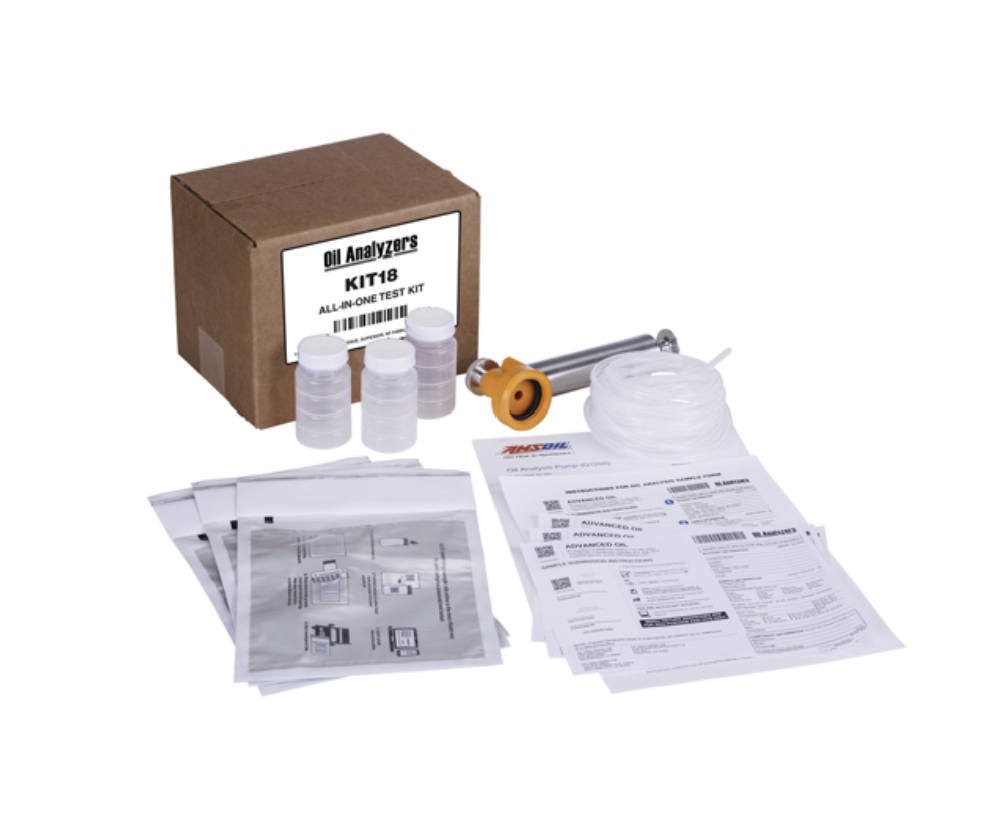
Every kit includes everything you need: instruction guide, sample bottles, test forms, shipping mailers, a vacuum pump, and sample tubing. Results come back as a written report from an OAI technical expert, with interpretation and recommendations — not just raw numbers.
How to Pull a Sample: It's Easier Than You Think
This is where most people assume it's complicated, and it isn't. The vacuum pump method — which comes with the kit — takes about 5 minutes once you've done it once.
The short version: you insert a small tube through the dipstick tube into the oil, attach it to the vacuum pump, and draw out a sample. Warm oil from a recently run engine gives you the best representative sample. Fill out a brief form with your equipment details, seal the sample bottle, and drop it in the provided mailer.
In the meantime, you can follow the full guide here: How to Perform an Oil Analysis.
Don't overthink the process. The kit is designed to be user-friendly, and I’m available by phone or email if you have questions about your results.
Reading Your Report: What You're Looking For
When your results come back, OAI provides a custom interpretation. But it's useful to understand the basic framework so the report makes sense to you.
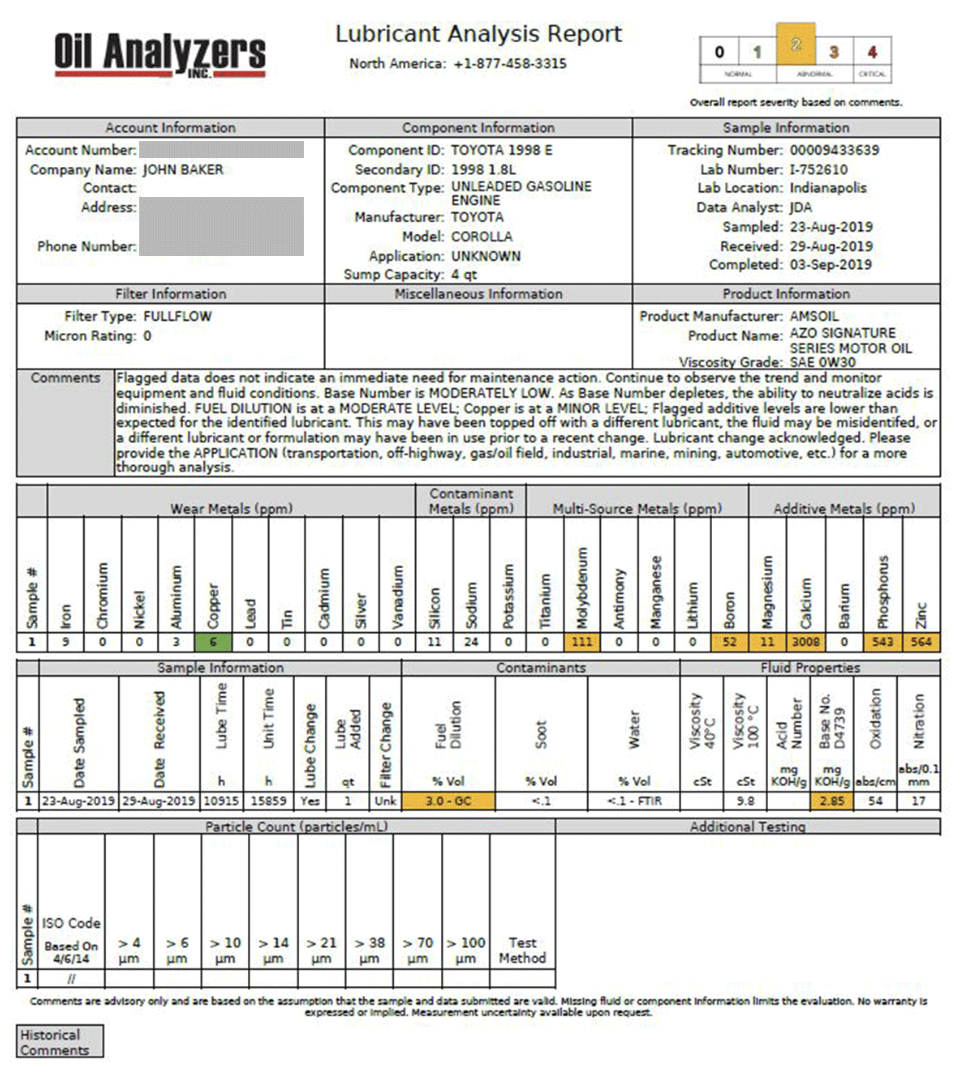
Results are typically flagged in one of three categories:
Normal — the value is within expected range for that engine type and oil interval
Caution — elevated but not alarming; worth monitoring on the next sample
Critical — indicates a problem that needs attention
For a first sample on a machine with unknown history, some elevated metals are common and not necessarily alarming — you're establishing a baseline. The trend across multiple samples is more informative than any single data point. If wear metals are elevated on sample one and lower on sample two, the situation is improving. If they're climbing, you have a developing issue.
The OAI technical expert who reviews your report will explain what they're seeing and what, if anything, you should do about it. That interpretation is part of what you're paying for — it's not just raw data.
How I Work With Customers on Oil Analysis: Ordering, Sampling, and Support
My goal with oil analysis is straightforward: I want customers to be comfortable pulling and submitting their own samples. The kits are designed for that, the process is simple, and the instructions are clear. Self-sufficiency is the point.
You can order kits directly through the AMSOIL oil analysis page — they ship with everything you need. If you're local and prefer to pick one up directly, reach out and we can arrange that.
If you're running a large operation with significant equipment volume and the logistics of sampling are complicated, get in touch and we can talk through what makes sense. That's a different conversation than a single-machine situation.
Either way, if you have questions about your results — what the numbers mean, whether you should be concerned, what to do next — I'm happy to talk through them with you. That's part of the relationship, not a separate service.
The Bottom Line
Oil analysis is a $30–$35 investment that can tell you whether a $10,000 engine is developing a problem before it turns into a $10,000 repair. For commercial equipment, it turns "I think the oil is probably fine" into "I know the oil is fine, and here's the data."
It's also the tool that makes extended drain intervals feel confident rather than risky — which ties directly into the cost-of-ownership math I cover in our fleet maintenance oil strategy post.
If you're running serious equipment and you're not doing oil analysis, you're making maintenance decisions without all the information you could have. The kit costs less than a case of oil.
Questions? Reach out: Don Archer | 770-655-5329 | archersynthetics@gmail.com
Orders and kits available through AMSOIL® — drop-shipped to your door.
FAQ: Oil Analysis Testing
What is oil analysis testing?
Oil analysis is a diagnostic process that tests a used oil sample for wear metals, contamination, and oil condition. The results tell you what’s happening inside your engine — wear patterns, potential problems, and whether the oil is still protecting effectively. It is a proactive maintenance tool, not a reactive one.
How do I pull an oil sample?
Using the vacuum pump included in the OAI kit, you insert a small tube through the dipstick tube and draw a sample of warm engine oil. The process takes about five minutes. The kit includes everything you need, including detailed instructions.
How much does oil analysis cost?
OAI kit pricing varies by kit type, but individual analysis tests run approximately $30–$35. Commercial program kits (which include multiple tests) are priced accordingly. Given the cost of engine repairs and the value of commercial equipment, the investment is straightforward to justify.
How often should I run oil analysis?
For commercial equipment running 400+ hours per season, at least once per season is a reasonable baseline. If you're using oil analysis to extend drain intervals, you'll want to run it at the point in your interval where you'd normally be deciding whether to change. For lower-hour applications, annual testing is usually sufficient.
Can I extend my oil drain interval based on oil analysis results?
Yes — that is one of the primary uses of the AMSOIL Drain Interval Oil Analysis Kit. The analysis tells you whether the oil is still protecting effectively at your current interval and gives you a data-based foundation for safely extending it further. Combined with AMSOIL synthetic lubricants, most commercial operators can extend intervals significantly compared to conventional oil schedules.
What does the oil analysis report look like?
You will receive a written report from an OAI technical expert that covers each tested parameter, flags anything in the caution or critical range, and provides recommendations. The report is readable without a chemistry background. The OAI team is available to walk you through anything that is unclear.
Do I need oil analysis if I'm already using AMSOIL®?
You do not need it for routine use on standard equipment with normal service intervals. But if you are running high-hour commercial equipment, considering interval extension, or managing an expensive engine build, oil analysis adds real value regardless of what oil you are running. It is not about trust — it is about data.
AMSOIL® is a registered trademark of AMSOIL INC. All AMSOIL® products available through Archer Synthetics, Authorized AMSOIL® Dealer (ZO# 515216) at archersynthetics.com.